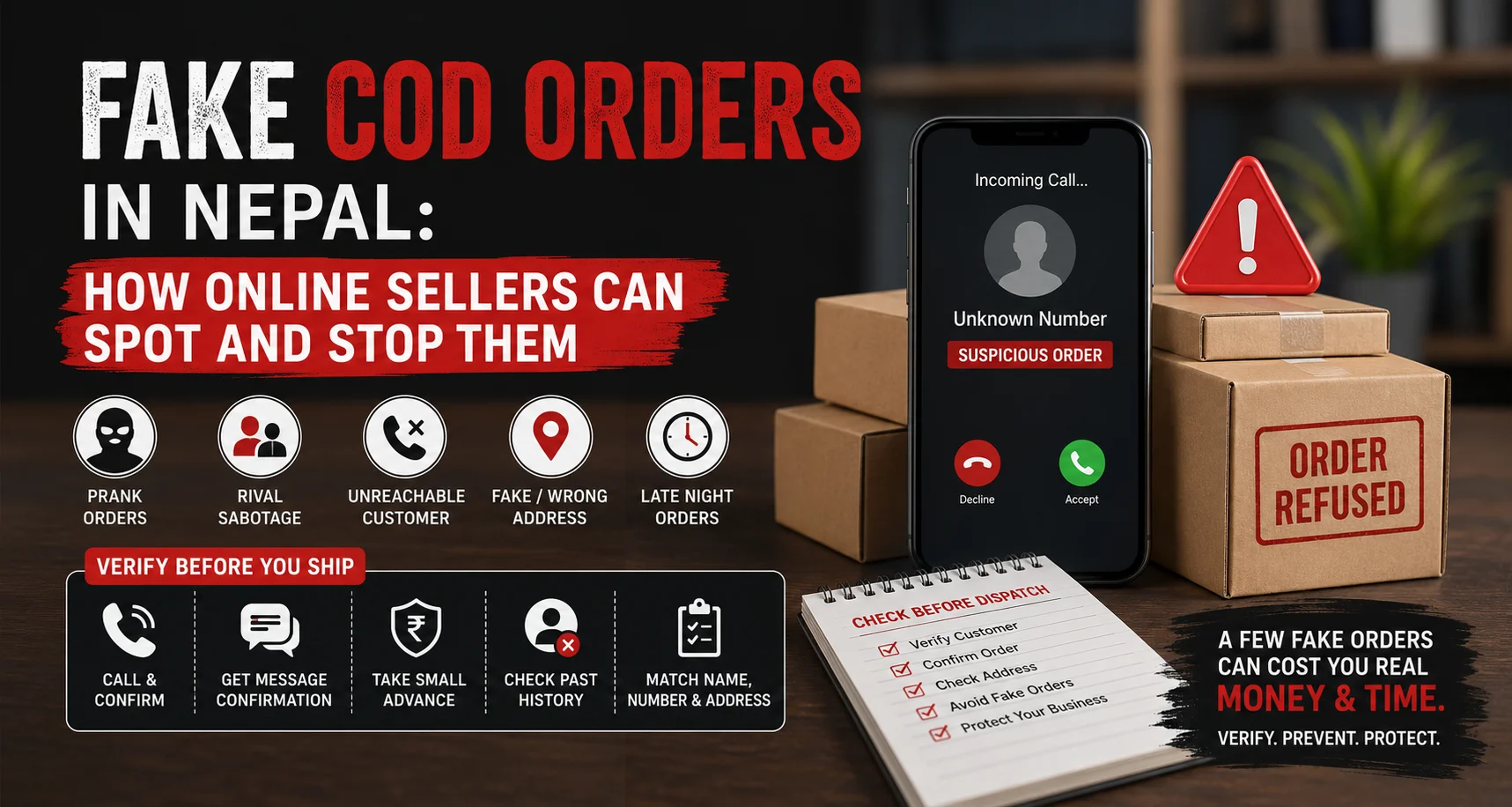
You get a notification. New order. You pack it, book a pickup, and pay for the delivery run. Three days later, the customer does not pick up the call, refuses the parcel at the door, or just disappears. No sale happened. You still paid for packaging, delivery, and time.
This is not bad luck. It is a fake or prank COD order, and it hits almost every online seller running Cash on Delivery in Nepal at some point.
What Counts as a Fake or Prank COD Order
A fake COD order is any order placed with no real intention of receiving or paying for it. Most cases fall into one of these types:
|
Type |
What It Looks Like |
|
Prank order |
Someone orders for fun, boredom, or to trouble a friend |
|
Rival sabotage |
A competing seller books fake orders under someone else's name to waste your stock and time |
|
Curiosity order |
A buyer orders just to test your delivery speed, with no plan to keep the item |
|
Impulse regret |
A real buyer orders on impulse, then avoids the call once payment is due |
|
Identity misuse |
Someone places an order using another person's name, number, or address without asking |
Why This Happens So Often in Nepal
-
COD needs zero commitment at checkout, so placing an order costs the buyer nothing
-
Most online shops in Nepal run on Facebook and Instagram with no order verification system built in
-
Anyone can order using a fake name, a friend's number, or a random address
-
Sellers rarely check a customer's past order or refusal history before shipping
-
During big sales, competitors can flood a page with fake orders to disrupt stock and delivery slots
What a Fake COD Order Actually Costs You
|
Cost Item |
What You Lose |
|
Packaging |
Box, tape, printed slip, and labor, gone even if the parcel comes back |
|
Delivery charge |
Paid to the courier for delivery attempt, usually non-refundable |
|
Return trip |
If unclaimed, you pay again to get the parcel back to your store |
|
Blocked stock |
Product sits in transit for days instead of going to a real buyer |
|
Sales data |
Fake orders make your actual performance numbers look wrong |
If you run 100 COD orders a month and even 10 turn out fake, you are paying packaging and delivery costs on 10 items with zero return. For a small seller, that is real money leaking out every single month.
We have covered return related losses in more depth in our guide on reducing RTO in Nepal eCommerce. Fake orders are a different problem from RTO, but they add to the same monthly loss.
Red Flags to Watch Before You Ship
-
Name looks fake, random, or joking, like "Test Order" or an obviously made up name
-
Phone number is switched off, always busy, or does not connect at all
-
Address is incomplete or points to a public place instead of a home or office
-
Order placed late at night, usually between 1 AM and 4 AM
-
Same number has refused a delivery from you before
-
Several orders placed within minutes from a new or unfamiliar account
-
Buyer avoids your confirmation call or ignores your message
-
A large first-time order from a completely unknown customer
How to Verify a COD Order Before You Dispatch
-
Call before you pack. A two-minute call catches most fake orders before you spend a rupee.
-
Send a WhatsApp or SMS confirmation and wait for a reply before booking pickup.
-
Ask for a small advance on high value items, even Rs 50 to 100. A buyer who refuses to pay a token usually refuses the parcel too.
-
Keep a simple list of numbers that have refused delivery before, and treat new orders from them as high risk.
-
Match the name against the address. Random or mismatched combinations are a common sign of a fake entry.
-
Hold late night orders from new accounts and confirm them the next morning instead of shipping right away.
What To Do If a Fake Order Already Happened
-
Do not blame the rider or the courier. They only followed the pickup and delivery instructions given to them.
-
Record the order details, number, and address for your own reference.
-
Add the number to your personal blacklist and check it before accepting future orders.
-
If the same number keeps repeating this pattern, share it with your courier partner. Reporting repeat numbers helps build a wider block list over time.
-
Shift that customer to prepayment only if they try to order again.
How NCN Delivery Helps Sellers Handle This
-
COD orders can be confirmed with the customer before final dispatch, on request
-
Delivery attempt history is visible through tracking, so sellers can spot refusal patterns early
-
Repeated refusals or unreachable numbers get flagged during pickup so sellers can decide before shipping again
-
Faster COD settlement means genuine payments reach you sooner, making it easier to separate real sales from problem orders
Quick Checklist Before You Ship a COD Order
|
Situation |
What To Do |
|
New customer |
Call and confirm before packing |
|
High order value |
Ask for a partial advance |
|
Order placed late at night |
Hold and verify the next morning |
|
Number has refused before |
Blacklist or move to prepayment |
|
Several orders at once from new accounts |
Check for a sabotage pattern |
Frequently Asked Questions
Is a fake COD order illegal in Nepal?
It can be, especially when it involves repeated harassment or uses someone else's details without consent. Single incidents are usually handled directly between seller and buyer, but repeated patterns are worth reporting to your courier and, if serious, to local authorities.
Can I refuse future orders from a number that pranked me before?
Yes. Keep your own record and apply a prepayment or advance rule to any number with a history of refusal.
Does asking for an advance payment reduce my sales?
It reduces fake orders far more than it reduces real sales. Genuine buyers usually agree to a small token payment, especially on higher value items.
How is a fake COD order different from RTO?
RTO covers real orders that failed for reasons like a wrong address, an unavailable customer, or a change of mind. A fake order was never real to begin with. Both cost money, but the fix is different.
What is the fastest way to confirm a COD order before shipping?
A short phone call before packing. It takes about two minutes and stops most fake orders before any cost is spent.